

Artificial Intelligence is one of the most transformative technologies of the modern era. It reshapes how we work, communicate, and solve problems. Today, it powers virtual assistants, recommendation systems, self-driving cars, and advanced healthcare tools. As a result, Artificial Intelligence has become part of everyday life. Moreover, as AI continues to evolve, understanding its basics becomes more important than ever. In this beginner’s guide, you will learn what Artificial Intelligence is, how it works, its types, and its impact on industries in 2026.
What Is Artificial Intelligence?
Artificial Intelligence (AI) enables machines and computer systems to perform tasks that normally require human intelligence. These tasks include learning, problem-solving, decision-making, and language understanding. In simple terms, Artificial Intelligence helps computers think and act intelligently.
Additionally, AI uses data and algorithms to detect patterns and improve performance over time without needing explicit programming for every action. Therefore, it plays a key role in modern technologies such as search engines, virtual assistants, and recommendation systems.
Today, Artificial Intelligence actively powers daily digital experiences. For instance, smartphones and online platforms use AI to improve speed, accuracy, and personalization. Consequently, AI stands as one of the fastest-growing technologies shaping modern life.
How Does Artificial Intelligence Work?
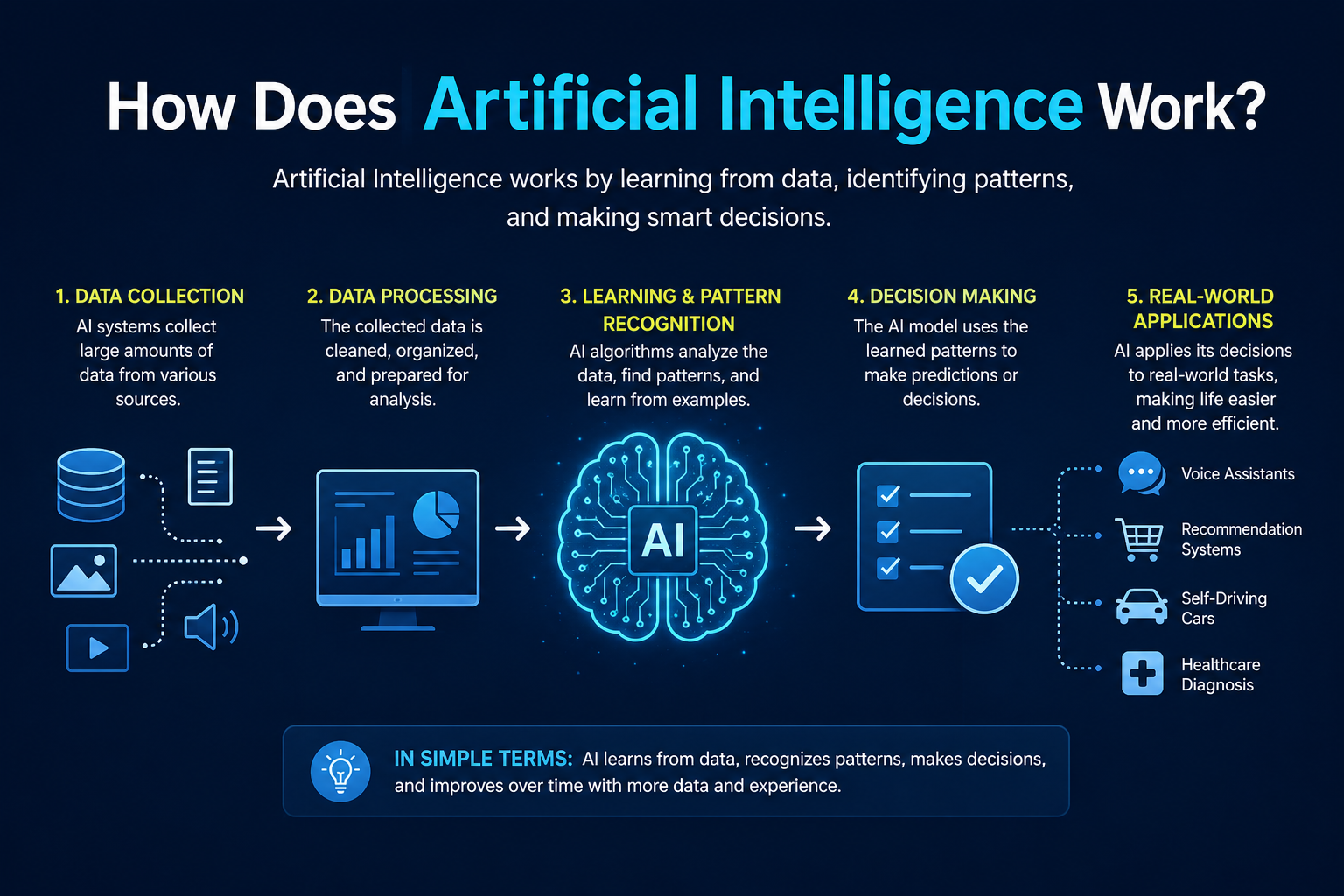
Artificial Intelligence works by using data and algorithms to mimic human intelligence. It processes large datasets, identifies patterns, and then makes predictions or decisions based on those patterns. In this way, AI strengthens modern digital systems.
A major component of AI is machine learning. In machine learning, systems learn directly from data instead of relying on manual programming for every task. As a result, AI continuously improves its accuracy as it processes more information and learns from past outcomes.
Furthermore, AI powers tools such as voice assistants, search engines, and recommendation systems. By constantly learning from new data, AI makes technology smarter, faster, and more efficient in everyday use.
Types of Artificial Intelligence
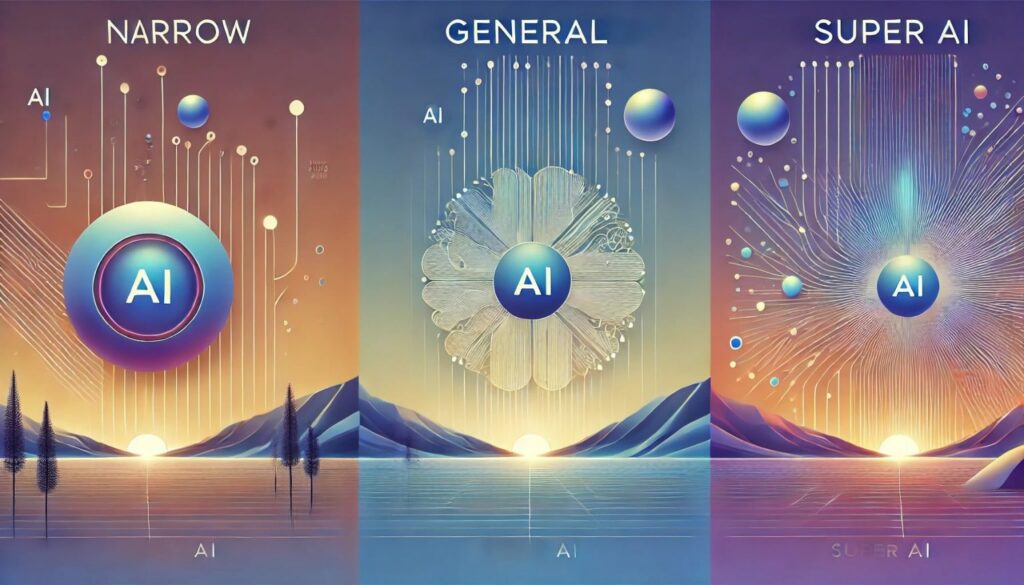
Artificial Intelligence can be divided into different types based on its capabilities:
1. Narrow Artificial Intelligence (Weak AI)
Narrow AI focuses on performing specific tasks. For example, it powers voice assistants, spam filters, and recommendation systems. Currently, this form of AI dominates real-world applications.
2. General Artificial Intelligence (Strong AI)
General AI aims to perform any intellectual task that a human can do. However, researchers still develop this type of AI, and it has not yet become a reality.
3. Super Artificial Intelligence
Super AI represents a theoretical stage where machines surpass human intelligence in all areas. Although it remains a future concept, researchers actively debate its possibilities and risks.
Real-World Applications of Artificial Intelligence
Artificial Intelligence is used in almost every industry today. Some of the most common applications include:
Healthcare
Artificial Intelligence helps doctors diagnose diseases, analyze medical images, and predict patient outcomes. It improves accuracy and saves lives.
Education
In education, Artificial Intelligence is used in personalized learning platforms, automated grading systems, and virtual tutors.
Business and Marketing
Companies use Artificial Intelligence to analyze customer behavior, improve marketing strategies, and enhance customer service through chatbots.
Transportation
Self-driving cars and traffic prediction systems rely heavily on Artificial Intelligence to improve safety and efficiency.
Entertainment
Platforms like Netflix and YouTube use Artificial Intelligence to recommend content based on user preferences.
Benefits of Artificial Intelligence
Artificial Intelligence delivers several powerful benefits:
- It increases efficiency and productivity
- It reduces human errors
- It automates repetitive tasks
- It improves decision-making
- It enhances user experience
- It operates 24/7 without interruption
Because of these advantages, industries across the world rapidly adopt AI technologies.
Challenges and Limitations of Artificial Intelligence
Despite its benefits, Artificial Intelligence also faces several challenges:
- It requires high development costs
- It depends on large volumes of data
- It lacks human creativity and emotional understanding
- It raises job displacement concerns
- It creates ethical and privacy issues
Therefore, developers and policymakers must address these challenges to ensure responsible AI usage.
Future of Artificial Intelligence
The future of Artificial Intelligence looks extremely promising. Experts predict that AI will continue evolving and integrating deeper into daily life.
In the coming years, AI will drive advancements in robotics, automation, and human-computer interaction. Moreover, it will help solve global challenges such as climate change, healthcare limitations, and education accessibility.
As AI continues to expand, it will create new job opportunities while transforming existing industries.
Why Artificial Intelligence Matters in 2026
In 2026, Artificial Intelligence is no longer optional—it is essential. Businesses, students, and professionals all benefit from understanding AI. It now shapes the future of work, communication, and innovation.
Therefore, learning Artificial Intelligence today prepares individuals for a smarter and more automated future.
Conclusion
Artificial Intelligence stands as one of the most important technologies of the modern era. It transforms how we live, work, and interact with the world. From basic automation to advanced machine learning systems, AI influences almost everything around us.
Understanding Artificial Intelligence helps individuals stay ahead in a rapidly changing digital world. As technology evolves further, AI will remain at the center of innovation and progress.
In conclusion, Artificial Intelligence is not just a technology—it defines the future of human development.