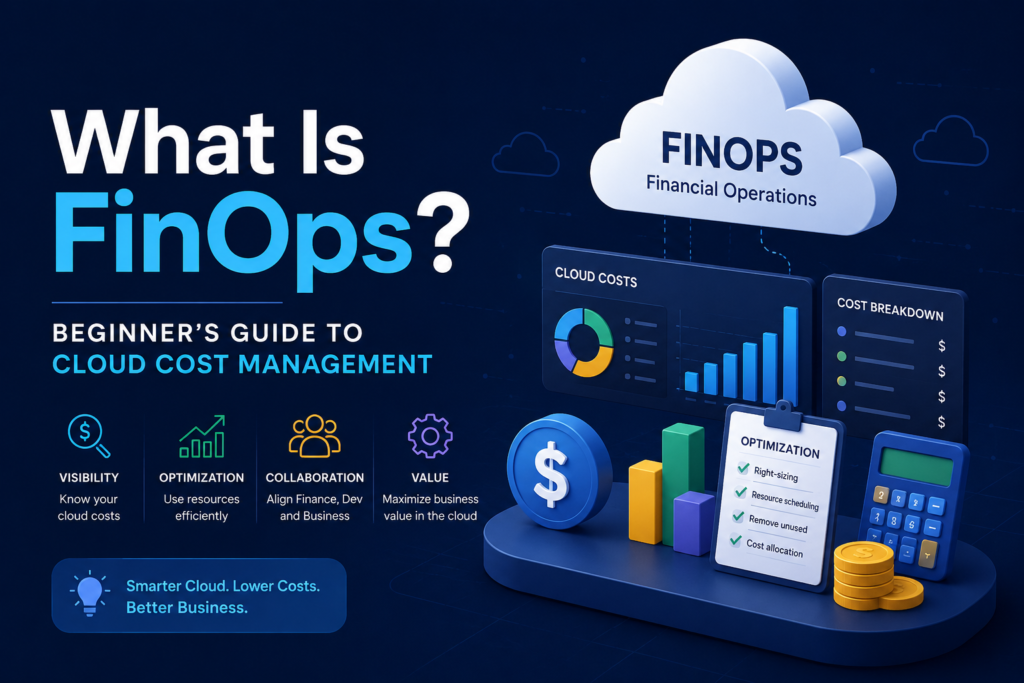

FinOps is the working practice that lets engineering, finance, and product look at the same technology bill and decide what to keep. In 2026 that bill is not only AWS or GCP line items. It is also Cursor seats, Claude Max upgrades, Copilot AI credits, and CI minutes spent re-running flaky AI-generated tests. This page explains FinOps in plain English, then shows how a small team applies it to AI coding spend without buying a bloated dashboard on day one.
The FinOps Foundation describes FinOps as an operational framework and cultural practice for maximizing business value from cloud and technology spend. Start with their FinOps for AI overview, then come back for the developer-tool angle.
Short answer: what FinOps means for a coding team
FinOps is not “the finance team yells at engineers.” It is three habits:
- Make spend visible by team or product (tags, separate API keys, separate Cursor/Claude seats when needed).
- Set a cap before the invoice surprises you (AWS budgets, Cursor on-demand limits, Copilot extra-usage budgets, Claude usage credits caps).
- Review the bill on a fixed cadence and change behavior — cheaper models for routine work, frontier models only for hard tickets.
If you only need sticker prices for tools, use our AI coding tools cost guide. If your spike is Cursor tiers, use Cursor Pro vs Pro+ and Is Cursor Pro+ Worth It.
Why generic “what is FinOps” pages fail teams in 2026
Most beginner FinOps articles stop at “collaborate across finance and engineering.” That is true and incomplete. AI coding agents moved a large share of spend into subscriptions and token meters that never appear in the classic EC2 report. A team can have perfect AWS tags and still blow $200 on the wrong Cursor Ultra seat or burn Copilot credits on agent loops that should have been Tab completions.
FinOps for AI coding teams therefore treats three ledgers as one system:
| Ledger | Examples | First control |
|---|---|---|
| Cloud infra | Compute, storage, egress, GPU | Cost allocation tags + budgets |
| AI coding seats | Cursor, Claude, Copilot, Codex | Plan tier + spend limits |
| Delivery waste | CI minutes, failed deploys, long AI PR review | Quarantine flaky tests; review AI PRs with a checklist |
A minimum FinOps setup you can finish in one afternoon
- One API key or workspace per team (or per product) at Anthropic / OpenAI / Google. Provider invoices become allocatable without a data warehouse.
- Tag every cloud resource that exists to serve agents: team, project, purpose=ai-coding.
- Cap Cursor on-demand or prepaid top-ups the same way you cap AWS. A missing spend limit is how a quiet Sunday becomes a finance ticket. See Cursor’s pricing and spending docs before you raise a limit.
- On Copilot, remember completions are unlimited on paid plans — credits burn on chat and agents. Track the usage panel before you buy Pro+.
- Measure one outcome for 30 days: cost per merged PR, or cost per accepted agent task — not raw tokens alone.
FinOps habits that cut AI coding waste
- Route renames, test scaffolds, and formatting to cheaper models or Cursor’s included Composer/Grok lane when quality allows.
- Start a fresh Claude Code session between major tasks so history tokens do not eat the shared five-hour window. Details: Claude Code rate limit fix.
- Do not buy Max and Ultra in the same month “to be safe.” Pick the wall you hit twice. Claude Max vs Cursor Ultra covers that ceiling fight.
- Put a human on AI-generated PRs that touch auth, payments, or migrations. Opsera’s 2026 work on longer AI review times is a useful caution — see AI code review.
What FinOps is not
It is not a license to freeze all AI tooling. It is not a 40-page policy nobody reads. It is not a second “What is cloud?” essay. If your page only restates that AWS is pay-as-you-go, it does not help a developer choosing between Pro and Pro+.
FAQ
What does FinOps stand for?
FinOps is commonly explained as cloud financial operations — a practice and culture for managing cloud and related technology spend with shared ownership across engineering, finance, and business.
Is FinOps only for huge enterprises?
No. A five-person team with separate API keys, one monthly spend review, and hard caps already practices FinOps. The spreadsheet can come before the vendor platform.
How does FinOps relate to AI coding tools?
AI seats and token meters are technology spend. Tag them, cap them, and review them with the same seriousness as compute — or they will quietly outgrow your AWS “savings” story.
Where should I start if my only problem is Cursor or Claude bills?
Start with the usage dashboard for that vendor, then our plan posts for that tool. FinOps is the monthly review habit that keeps the upgrade from becoming permanent panic.
Next step
Pick one ledger this week — cloud tags, Cursor spend limit, or Copilot credit review — and close it. Then link the habit to the tool guides already on Bytereviewer instead of collecting another definition page.